Showing posts with label 134a. Show all posts

Monday, September 16, 2013

Safeway Must Fix Ozone-Depleting Refrigerant Leaks Nationwide

WASHINGTON, DC, September 5, 2013 (ENS) – Safeway, the second largest U.S. grocery store chain, has agreed to pay a $600,000 civil penalty and implement a corporate-wide plan to reduce its emissions of ozone-depleting substances from refrigeration equipment at 659 of its stores in a settlement of alleged violations of the federal Clean Air Act.

The settlement, estimated to cost approximately $4.1 million, involves the largest number of facilities to be brought into compliance under the Clean Air Act’s regulations governing refrigeration equipment.
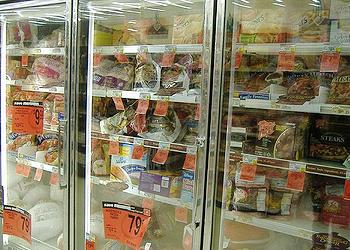
freezer
Freezer in a Safeway store, Portland, Oregon (Photo by Heather)

“This first-of-its-kind settlement will benefit all Americans by cutting emissions of ozone-depleting substances across Safeway’s national supermarket chain,” said Robert Dreher, acting assistant attorney general for the Justice Department’s Environment and Natural Resources Division. “It can serve as a model for comprehensive solutions that improve industry compliance with the nation’s Clean Air Act.”

The settlement agreement resolves allegations by the U.S. Environmental Protection Agency and Justice Department that Safeway violated the Clean Air Act by failing to promptly repair leaks of the hydro-chlorofluorocarbon HCFC-22, a common refrigerant used by supermarkets that is a greenhouse gas and an ozone-depleting substance.

The grocery chain also failed to keep adequate records of the servicing of its refrigeration equipment, the government agencies allege.

EPA regulations issued under Title VI of the Clean Air Act require that owner or operators of commercial refrigeration equipment that contains over 50 pounds of ozone-depleting refrigerants, and that has an annual leak rate greater than 35 percent repair such leaks within 30 days.

HCFC-22 is up to 1,800 times more potent than carbon dioxide in terms of global warming emissions. The measures that Safeway has committed to are expected to prevent over 100,000 pounds of future releases of ozone-depleting refrigerants that destroy the ozone layer.

Safeway will now implement a corporate refrigerant compliance management system to comply with stratospheric ozone regulations.

Under the settlement, Safeway has agreed to reduce its corporate-wide average leak rate from 25 percent in 2012 to 18 percent or below in 2015. The company will reduce the aggregate refrigerant emissions at its highest-emission stores by 10 percent each year for three years.
“Safeway’s new corporate commitment to reduce air pollution and help protect the ozone layer is vital and significant,” said Cynthia Giles, assistant administrator for EPA’s Office of Enforcement and Compliance Assurance.

“Fixing leaks, improving compliance and reducing emissions will make a real difference in protecting us from the dangers of ozone depletion, while reducing the impact on climate change,” said Giles.

HCFCs deplete the stratospheric ozone layer, which allows dangerous amounts of cancer-causing ultraviolet rays from the sun to strike the Earth, leading to adverse health effects that include skin cancers, cataracts, and suppressed immune systems.

“The impact of ozone depletion is a global phenomenon, and the health and environmental harm as a result of Safeway’s emissions do not have particularized impact on communities near stores where the violations occurred,” explains the EPA. “However, all citizens may be more susceptible to skin cancers, cataracts and immune system suppression as a result of violations like these.”

Under the Montreal Protocol, an international treaty, the United States is implementing strict reductions of ozone-depleting refrigerants, including a production and import ban on HCFC-22 by 2020.

The settlement is part of EPA’s national enforcement initiative to control harmful air pollution from the largest sources of emissions, including large grocery stores.

EPA’s GreenChill Partnership Program works with food retailers to reduce refrigerant emissions and decrease their impact on the ozone layer and climate change by transitioning to environmentally friendlier refrigerants, using less refrigerant and eliminating leaks, and adopting green refrigeration technologies and best environmental practices.

Safeway, headquartered in Pleasanton, California has 1,412 stores in the United States and 2012 revenues of $44.2 billion. Safeway operates companies under the banner of Vons in southern California and Nevada, Randalls in Texas, and Carrs in Alaska.

The settlement was lodged Wednesday in the U.S. District Court for the Northern District of California, and is subject to a 30-day public comment period and final court approval. It will be available for viewing at www.justice.gov/enrd/Consent_Decrees.

Monday, August 26, 2013

Stopped Cold: Mercedes Sales Blocked in France

BERLIN — Even as showrooms in Europe prepare for the arrival of 2014 vehicles, authorities in France have sparked controversy with a drastic action: blocking the registration — effectively shutting down sales — of some popular new Mercedes-Benz cars, including the A-Class, B-Class, CLA and SL models.

The French environment ministry ordered the ban in response to the German carmaker’s defiance of a European Union regulation on the refrigerants permitted in automotive air-conditioning systems, and the ministry says that it won’t back down until Daimler, the parent of Mercedes, complies. The European Union, though supportive of France’s position, has agreed to step in and referee to keep the squabble from spreading.
      
Why such an uproar over a matter as arcane as an air-conditioning refrigerant?
The ban on registrations was put in place after Mercedes refused to switch to a refrigerant compound that is considerably more climate-friendly than the one currently used in almost all car air-conditioning systems. Mercedes contends that in its crash tests and other independent safety research, the replacement material was flammable in cases where it leaked onto hot engine parts, and that it produced a dangerous gas when burned — increasing the potential harm to passengers in an accident.
European regulators have agreed to review the German test results as part of the process of resolving the tiff. Because of the safety concerns, Germany’s Federal Motor Transport Authority approved the new models for sale with the current refrigerant, a position that escalated the matter from a disagreement over technology to a political dispute.
      
The issue is of interest to American automakers, as regulators in the United States are likely to consider the new European rules. Naturally, it would benefit the global auto industry to select one common refrigerant for all markets, making it possible to build a single air-conditioning system for domestic and export models.
      
The imbroglio heated up in the 1970s, when the refrigerant compound known as R-12, a chlorofluorocarbon, was deemed a threat to the earth’s protective ozone layer. Like other fluorocarbons, it was outlawed and replaced with supposedly benign alternatives. In the case of vehicles, an ozone-friendly compound known as R-134a took its place. The move is generally regarded to have been effective: since the worldwide shift away from fluorocarbons, the ozone hole has not only stopped growing, it has actually contracted.
       
But R-134a was found to have its own warts, namely that when leaked, the fluid serves as a potent greenhouse gas, packing a punch 1,400 times as great as carbon dioxide, the Environmental Protection Agency says. When that property came to the attention of the European Union, it mandated that as of 2011 any refrigerant with a global warming potential more than 150 times that of carbon dioxide would be forbidden in all newly engineered models. By 2017, this ban would apply to all new vehicles sold.
      
In the search for substitute compounds for R-134a, nonflammable carbon dioxide was championed as a viable alternative, and Mercedes announced this month that it would continue to develop CO2-based systems. Carbon dioxide is commonly used as an industrial refrigerant — worldwide by the Coca-Cola Company, for instance — and is cheap and abundant.
      
But converting to carbon dioxide-based climate control systems, which require high operating pressures, would entail hardware modifications costing around $130 per vehicle, according to Jürgen Resch, director of the watchdog group German Environmental Aid, based in Berlin. 
      
In Europe, automakers chose a new refrigerant developed by Honeywell International and DuPont, called R-1234yf, that has a far lower global warming potential than R-134a (only four times that of carbon dioxide, according to the E.P.A.) and can replace it without any changes to the hardware under the hood. Honeywell and DuPont control the global supply of R-1234yf, and the companies are forecast to reap billions of dollars in sales.
      
Mercedes originally complied with the refrigerant directive, but its safety tests showed R-1234yf to be flammable, a finding that watchdog groups agreed with.
“The Daimler tests weren’t the first that showed R-1234yf to be extremely dangerous,” Mr. Resch said. “Four years ago, independent testing came to these conclusions, but at the time the likes of Daimler didn’t want to listen. We were surprised but pleased to see they eventually came to the same conclusion.”
      
Late last year, Mercedes recalled cars fitted with R-1234yf-based cooling systems, saying the company would return to R-134a until a better substitute was found.
      
France says it will remain steadfast. The registrations of noncompliant Mercedes models “will remain forbidden in France as long as the company does not to conform to European regulations,” the environment ministry told Reuters.
      
The blocked models account for most of Daimler’s French business and 2 percent of its global sales. Daimler is contesting the ban in court, and a hearing was scheduled for Aug. 23.
The tussle might lead to a better solution for all parties, including American carmakers. Proponents of carbon dioxide, water and air-based air-conditioning systems say that Honeywell and DuPont squeezed them out of the competition before they could get a fair hearing.
      
The German automakers, at least, are ready to look again. According to Der Spiegel, the German weekly, an air-cooled air-conditioner is nearly ready for market and would already be on the road had the playing field for a replacement system been level.

Tuesday, August 20, 2013

A-Gas RemTec's Refrigerant Consignment Program

Refrigerant Consignment Program:

A-Gas RemTec’s Refrigerant Consignment Program has been developed to save you time and money.  We will put refrigerants at your site and you use when needed. This eliminates the time and cost of running to the wholesale house to pick up what you need.

The product will be sent to your location at no cost to you and A-Gas RemTec will bill you for only what you have used for that month. There are no service fees or hidden charges. We supply you with what you need for when you need it.

Call today for more information about A-Gas RemTec’s Refrigerant Consignment Program!

1-888-873-6832


Wednesday, August 14, 2013

R134a Refrigerant

Do you use R-134a refrigerant?

A-Gas RemTec can provide you with R-134a in 30lb, 145lb, 1,000lb, 2,000lb, ISO Truck Tank and 30lb pallet quantities.

The R-134a meets AHRI 700-2006 Specification and we provide a certificate of analysis for every shipment.

Are any of your cylinders out of test date?

A-Gas RemTec is a certified Department of Transportation (DOT) hydrostatic testing facility.
We'll internally wash, hydrostatically test and recertify your tanks.

Other required services (based on cylinder size) and optional services are available.

Do you recover R-22?

A-Gas RemTec will pay you for it if it meets 98% purity.


We'll pay the freight both ways, if you can provide us with our minimum net weight requirement of R-22.

Tuesday, August 13, 2013

German KBA Authority Offers New Report on AC Refrigerant Soap Opera

If the Daimler AG versus France air-conditioning refrigerant saga would be a book, this new information would be the chapter when the plot suddenly thickens.

As you all probably know by now, France has banned the sale of the Mercedes-Benz A-Class, B-Class and the CLA on their territory over the models' use of the R134a AC coolant, which will be outlawed by the European Union from 2017 for environmental reasons.

Germany's Federal Motor Transport Authority (KBA) recently issued a report of its findings following the subsequent testing of a number of cars that use the new R1234yf air conditioning coolant, which is set to replace the old R134a.

Their conclusion? The new refrigerant - which has been ostracized by Daimler AG following over 100 in-house test that proved it possesses an increased fire risk during certain types of head-collisions – is more hazardous than the old one, but it doesn't comprise a serious danger.

“Due to the comparisons with the previous refrigerant 134a in Stage 3, one can ascertain that the safety level of cars tends to deteriorate when 1234yf is used,” the KBA report mentioned.

Although the report is kind of in line with France's stance in the matter, looking deeper in the details given it also appears that Daimler AG is not exactly the boy who cried wolf when there wasn't any wolf in sight.

Of the four cars tested by the KBA (A Mercedes-Benz B-Class, A Hyundai i30, Subaru Impreza and an Opel Mokka) one of them burst into flames and also emitted a pretty considerable amount of the highly toxic hydrogen fluoride gas.

According to the report, quoted by Reuters, “non-negligible” amounts of the gas were detected in two of the other cars being crash tested, but the coolant itself only ignited in one test. In other words, for the time being, everyone is right about the matter. A more comprehensive final report will be released in mid-september, while the EU officials will obviously have the final word. Our say? Why don't you check out our editorial to find out a more personal opinion.

Thursday, June 13, 2013

Update: Car engineers pour cold water on Daimler refrigerant fire claims

29 April 2013 | By
Car engineering research group SAE International has reported the conclusions of its extensive analysis of HFO 1234yf, calling the refrigerant “safe and effective to use in automotive applications” - free to view, simply register
The team on SAE’s Cooperative Research Programme, comprising most car manufacturers from Ford to Renault to Toyota, concluded that “the risk of passenger exposure to a vehicle fire associated with this refrigerant is exceptionally remote”.

The CRP was established to examine Mercedes owner Daimler’s claims that HFO 1234yf ignited in a staged head-on collision, whereas the previous refrigerant R134a, outlawed by the Mobile Air Conditioning directive, did not.

In the wake of lurid claims about the risk of flammability in the UK tabloid press, the SAE said CRP team members had again concluded that the refrigerant release testing conducted by Daimler is unrealistic, following numerous additional tests of various types to study ignition of an HFO 1234yf leak in a crash-damaged vehicle.

In another strongly worded statement, SAE said Daimler’s test “is not an appropriate test to verify the safety of refrigerant applications in vehicles. The Daimler testing did not include any actual vehicle collisions or the mitigating factors that occur in an actual collision.”

It said these factors include the quenching effect of front end compartment deformation, the extinguishing effect of steam released due to radiator breakage, and dispersion of the refrigerant from the condenser outside the engine compartment.

“Daimler’s refrigerant release apparatus and nozzle does not represent actual crash-damaged refrigerant lines, and was found to be artificial.”

The report was welcomed by Honeywell Fluorine Products, the manufacturer of the HFO, which emphasised that even those German manufacturers which have indicated they are in favour of using CO2 in the future cars had not found anything unsafe about the HFO.

Honeywell European managing director Paul Sanders said: “Pretty much all of the car industry has said publicly it can use 1234yf safely, including all members of the [German carmakers group] VDA, apart from Daimler. Opel had its test programme undertaken by engineering body TUV (above), which is globally respected.”

Following the report, Mr Sanders said Honeywell was now calling for the European Commission to censure Daimler for continuing to defy the MAC Directive. If strictly applied, the EC could forbid the registering of non-compliant cars, such as the Mercedes A and B class models which are still being produced with R134a, in contravention of the directive.

He said: “All we can ask is that the law is adhered to. The MAC directive is unequivocal that non-compliant cars should not be registered. The car industry has had seven years to make a compliant vehicle. HFO 1234yf is available today, it meets the MAC directive and it is cost-effective.”

Mr Sanders also claimed that Daimler’s preferred refrigerant carbon dioxide – which it has asked the EC for more time to develop – is not as environmentally friendly as HFO 1234yf across the lifetime of a vehicle.

He said: “CO2 is a smokescreen and it is three to five years away at best. As it is an asphyxiant it would need significant changes to car designs and the service charges would be higher, since if it was to leak, it would all leak at once.”

He warned that the Commission needed to take action against Daimler or risk appearing ineffectual: “It sets a dangerous precedent for the forthcoming F-Gas regulations if one company is allowed to go its own way and flout the law. Allegedly Daimler is saving 50 euros a car for not using 1234yf.  It is not a safety issue, it is a political issue.”

Tuesday, October 2, 2012

A-GAS INTERNATIONAL EXPANDS ITS PRESENCE IN AMERICA

LEADING REFRIGERANTS SUPPLIER A-GAS INTERNATIONAL COMPLETES STRATEGIC ACQUISITION OF KEY INDEPENDENT US REFRIGERANTS SUPPLIER AND DISTRIBUTOR, COOLGAS

Bristol-based A-Gas International (or“the Group”), one of the world’s largest independent suppliers of refrigerants, associated environmental services, and speciality gases and chemicals, has completed the acquisition of Houston, Texas based Coolgas Inc. (“Coolgas”), a leading independent supplier and distributor of refrigerants to the US market. The terms of the transaction were not disclosed.

The transaction represents the fifth strategic acquisition completed by A-Gas so far in 2012, and forms part of the Group’s acquisitive growth strategy which is being executed both in the UK and internationally. The enlarged group will have a turnover of c. £130m and 237 employees.

Founded in 1994 by Jesse Combs, Coolgas has grown over the past 18 years to become one of the leading independent distributors of refrigerants in the US. Coolgas’ “refrigerants made simple” philosophy reflects the focus on customer service that has enabled it to grow first to a regional and then to a national player. Coolgas has recently commissioned a new refrigerant storage and packaging facility in Houston and has distribution centres in California, Utah, Arizona, Indiana, Michigan, Maryland and Georgia ensuring that Coolgas is close to its customers wherever they are located.

In recent years Coolgas has also become an EPA registered reclaimer of refrigerants and a project developer for the generation of carbon offsets on the California Climate Action Reserve exchange. These capabilities enable Coolgas to manage the lifecycle of Ozone Depleting Substances (ODS) and substances with high Global Warming Potential (GWP) to safeguard the environment.

The acquisition builds on A-Gas’acquisition of Ohio based refrigerant reclaimer and halocarbon management specialist RemTec International in July 2012. Coolgas provides a strong strategic fit, bringing a strong brand and complementary footprint that will accelerate refrigerants sales growth. Further the reclaim and carbon credits businesses extend A-Gas’ existing operations in the US Environmental Services market which is already well established in the UK and Europe.

The acquisition of Coolgas follows on from the successful acquisitions not only of RemTec International in July 2012 but also of Australian based Technochem in March 2012 and SA Rural in May 2012, and UK based A-Zone Technologies in April 2012.

Commenting on the acquisition:

John Rutley, Executive Chairman and founder of A-Gas International said:
Jesse Combs and his management team have built a great business in the US refrigerant sector and we are delighted to add it to our rapidly expanding presence in this important market. The fit with our recently acquired business, RemTec, is perfect and allows us to offer a full range of products and services to our customers in the world’s largest refrigerant market.

Jon Masters, Regional Managing Director of A-Gas International said:
The acquisition of Coolgas will significantly strengthen our position as the leading independent global supplier of refrigerants at a time when regulatory changes are providing increasing opportunities for reclamation and recycling of used refrigerants using our market leading technology developed in the UK. We look forward to supporting the Coolgas management team and workforce in continuing to provide outstanding service to its customers.

Jesse Combs, CEO of Coolgas said:
I feel honoured that A-Gas saw Coolgas as a strategic fit and entry point into the US refrigerants’ distribution business. Our team of professionals have a customer service mind-set that I believe sets Coolgas apart from the rest of the industry. I have the upmost confidence that the A-Gas team will support and grow upon our "refrigerants made simple" philosophy for many years to come.


About A-Gas International

A-Gas is an international group of companies with headquarters in Bristol, UK. A-Gas is a market leader in the supply of refrigerants within its core territories in the U.K., South Africa, and Australia, and has state of the art storage, blending, packaging and reclamation facilities in Bristol, Cape Town, and Melbourne. The company also has marketing and distribution centres in Singapore, Thailand, China and Mexico. In the US, A-Gas has a Performance Chemicals business located in Doylestown, Pennsylvania; RemTec International, a refrigerant reclaimer and halocarbon management specialist located in Bowling Green, Ohio; and now Coolgas, headquartered in Houston, Texas. For more information, visit www.agas.com


About Coolgas

Coolgas Inc. was started in 1994 as a distributor of refrigerant gases. Through a continual focus on customer service embodied by its “refrigerants made simple” philosophy it has gained customers across the United States and grown to become one of the leading independent distributors of refrigerants. Coolgas supplies a full product range from essential use CFCs through to the most recent HFC blends. Coolgas also supplies in a wide variety of formats from the smallest auto aftermarket disposable cans through to bulk tankers for industrial customers. Coolgas is an EPA approved refrigerant reclaimer. The Coolgas, Inc. headquarters are located 40 miles north of Houston, Texas. For more information visit www.coolgas.com

Friday, June 22, 2012

Dangerous counterfeit R-134a

By Elvis L. Hoffpauir, President and COO MACS Worldwide

Last December, MACS circulated a press release from member company Neutronics Inc’s. Refrigerant Analysis Division, warning about counterfeit R-134a refrigerant contaminated with significant quantities of R-40 (aka methyl chloride or chloromethane). R-40 is extremely toxic, flammable and highly reactive when exposed to aluminum. In some cases R-40 may react with aluminum to form a third, highly unstable compound (trimethylaluminum or TMA) that ignites in contact with air.

This counterfeit R-134a mixed with R-40 and other refrigerants has apparently been purposely designed to mimic pure R-134a at a substantially reduced cost, the likely motivation of the counterfeiters. Current refrigerant identifiers, certified to SAE J1771, are not designed to directly identify R-40.

Prior to issuing the warning, Neutronics had been engaged by the oceangoing shipping industry to assist with an R-134a refrigerant contamination problem involving R-40 that resulted in three deaths in three separate incidents. Since that time Neutronics has been working with the Army, which positively identified R-134a contaminated with R-40 in Army depot supplies. Ground combat and tactical vehicles serviced in Afghanistan and Iraq have been affected, and while the Army does not currently know the depth of contamination, it suspects that vehicles and reclaimed supplies may be contaminated.

At an April 25 meeting of Society of Engineers Interior Climate Control Standards Committee, Peter Coll, MACS director and vice president of Neutronics Refrigerant Analysis, provided field test data from 30 samples of recovered refrigerant from both vehicle and commercial applications. R-40 contamination levels of the samples ranged from less than one percent to 10.1 percent. All of the samples tested also contained other refrigerants including hydrocarbons, R-22 and R-12.

Army representatives asked that the SAE Committee form a working group to develop procedures to identify and isolate contaminated vehicles and equipment, as well as ways to safely service vehicles to return them to mission-ready status.

It should be noted that these contaminated refrigerant systems can pose a major safety issue to those working on them. Currently the industry is working on, but has not determined, the best service procedures to be used. Contaminated systems can damage recovery and recycling equipment, and can result in the requirement to replace all vehicle refrigerant circuit components.

At an April 24 meeting on R-40 in Australia organized by Michael Bennett, general manager of Refrigerant Reclaim Australia, industry representatives discussed the discovery of the counterfeit refrigerant in newly manufactured equipment imported from China. Very high levels of corrosion were said to be present in these systems, and it is thought that rapid corrosion takes place once a contaminated system is installed and operated. Like the SAE and others, this group is working to gain a better understanding of the potential extent of the contamination in order to develop an appropriate plan to manage the threat.

Ron Henselmans, vice chairman of Mobile A/C Partners Europe and editor-in-chief at “Automotive A/C Reporter,” first reported R-40 contamination found in Europe in his March, 2011 issue.
In December, 2011 R-40 contamination had not yet been discovered in North America, but in April 2012 lab tests confirmed the presence of R-40 in a number of containers of recovered refrigerant in the U.S. With the confirmation from the military that infected vehicles have invaded our shores, containment actions are of paramount importance. This problem has been seen in many parts of the world having much smaller mobile A/C fleets, so there is the potential for the same problem in the North American market.

While there is no reason to believe that this contamination is currently widespread in this market, its existence serves as one more reason service shops should remain vigilant and purchase their refrigerant from authorized distributors of their chosen refrigerant manufacturer.

The Mobile Air Conditioning Society’s blog has been honored as the best business to business blog in the Automotive Aftermarket by the Automotive Communications Awards and the Car Care Council Women’s Board!

When having your mobile A/C system professionally serviced, insist on proper repair procedures and quality replacement parts. Insist on recovery and recycling so that refrigerant can be reused and not released into the atmosphere.

If you’re a service professional and not a MACS member yet, you should be, click here for more information.

You can E-mail us at macsworldwide@macsw.org or visit http://bit.ly/cf7az8 to find a Mobile Air Conditioning Society member repair shop in your area. Visit http://bit.ly/9FxwTh to find out more about your car’s mobile A/C and engine cooling system.
The 33rd annual Mobile Air Conditioning Society (MACS) Worldwide Training Conference and Trade Show, Be the Best of the Best will take place February 7-9, 2013 at the Caribe Royale, Orlando, FL.

Friday, March 30, 2012

Air Condition Coolant Being Phased Out, Prices Triple

NORTH TEXAS (CBSDFW.COM) - If the air conditioning unit at your home was manufactured before 2010 expect a common summer repair to cost up to triple the usual amount.

There is now a new, environmentally friendly, version of Freon — the coolant gas used in a/c units. With the development of the new U.S. Environmental Protection Agency-backed product, the old Freon, R-22, is being phased out.

Air conditioning professionals say with the elimination of R-22 consumers can expect repair costs to increase substantially.

“The refrigerant’s definitely gonna, it has tripled in cost so obviously that cost has be passed on to the consumer,” said Randy Kelly, with One Hour Heating & Air Conditioning. “So, if someone has a refrigerant leak and it has to have R-22 put back in it, it’s really gonna make that repair cost more.”

According to Kelly, the price for a pound of R-22 has jumped from around $20 a pound to up to $90.

Refilling air conditioners with Freon is anything but unusual and is often done annually, as opposed to undergoing expensive mechanical repairs.

“Air conditioners do develop leaks, over a period of time, and it is a common repair,” said Kelly. “There are no telling how many units out there that have leaks that people just a pound, or two pounds, in every year.”

Kelly suggests that homeowners with a serious problem either fix the leak immediately or replace the unit.

The EPA is now requiring air conditioning manufacturers to use Freon R-410A in their units, which is a cleaner gas.

Wednesday, March 28, 2012

Price for air-conditioning service has 'tripled to quadrupled' due to new EPA rules

As temperatures increase with the onset of spring, so, too, will the cost for repairing and refilling air conditioners with the coolant gas known as Freon.

Northeast Florida air-conditioning contractors have already started to warn customers seeking repairs to brace for a dramatic jump in adding the gas that provides the coolant in air conditioners. Compared to a year ago, the price for putting Freon in a residential or commercial air conditioner will be radically more expensive.

The price jump affects air conditioners that were mainly manufactured before 2010.

“What it means is they have tripled to quadrupled their price on Freon for a service call,” said Tom Karol, a service technician at Don’s Air Conditioning in Jacksonville. “That’s a hell of an expense.”

The jump in Freon costs is the result of a U.S. Environmental Protection Agency directive implemented this year. The EPA is phasing out production of the old Freon, known as R-22. That’s because the coolant contained hydrochlorofluorocarbons, which are the gases believed to be eroding the earth’s ozone layer. Instead, the EPA is requiring air conditioning manufacturers to use Freon R-410A, which is a cleaner gas.

That means the price of the old type of Freon has jumped from about $40 per pound to about $90 per pound. A refill of Freon in an air conditioning unit usually takes about 5 to 10 pounds of the gas.

“These are direct costs that we are paying to buy this refrigerant and we have no choice but to pass this along to the consumer” said Ed Miller, president of Snyder Heating and Air Conditioning in Jacksonville.

The bulk of the high cost in Freon to customers is almost entirely linked to repairs to existing air conditioning units in homes and businesses. Vehicles are not affected, Miller said, because the environmentally-threatening Freon was eliminated from use in vehicles long ago.

But since the new Freon was introduced and the old style of Freon’s production was ordered by the EPA to be reduced, old tactics for maintaining an air conditioner, such as simply refilling a leaky refrigerant gas chamber, are no longer financially feasible, Miller said.

Miller said a single repair cost has jumped from about $100 to $400.

“Sometimes they [air conditioning units] have small pin-hole leaks that cause them to leak out. … Making the repair and fixing the refrigerant leak is more necessary now because of the high price of the refrigerant,” Miller said.

A slow leak in the past was simply refilled by many owners of air conditioning units, Miller said. But refills are so expensive, it’s best to actually repair the device or replace it rather than just refilling it.

“Now, you’ve got to replace the whole thing or the compressor,” Karol said. “When we’re explaining it to people they’re kind of taken aback and they don’t know what to do. They’re trying to hold off on doing anything right now because it’s not that hot or that cold right now.”

The increased Freon costs come on top of a new Florida regulation that requires air conditioning contractors to complete an energy calculation survey of a structure before a system is installed. That went into effect March 15 and adds another cost of about $100 to $300 owed to contractors for the inspection work.

But as summer and hotter temperatures approach, Karol said there will be less R-22 Freon and anyone putting off air conditioning repairs will pay a stiff price.

“When it starts taking effect, the cutbacks of Freon R-22, it’s really going to hit people hard,” Karol said. “I look for Freon to probably go over $500 for a 28-pound tank.”

drew.dixon@jacksonville.com, (904) 359-4098


Cost: About $90 per pound
High pollution: Contains hydrochlorofluorocarbons, which erode ozone layer
Obsolete: Meant for air-conditioning units made before 2010
Production: Being phased out due to EPA mandate
Cost: About $80 to $100 per pound
Environmentally friendly: Contains no hydro-chlorofluorocarbons; no impact on the ozone layer
Contemporary: Can be used on new air-conditioning units as well as those manufactured before 2010
Production: It’s in high production and will replace the original Freon R-22 gas entirely

Tuesday, January 3, 2012

Halt on gas import

Samisoni Nabilivalu
Friday, December 23, 2011

THE Department of Environment has revealed that a batch of Refrigerant 134A (R134A) sold locally is actually not 100 per-cent R134A.
The imported refrigerant is used in the car air conditioning systems and commercial and domestic refrigeration.

According to the packaging, the cylinder contains R134A but tests conducted by Seru Ramakita, an Ozone Depleting Substances Inspector with Department of Environment, have proven otherwise.

Mr Ramakita made the discovery by accident earlier this year when demonstrating the use of a refrigerant identifier to customs officers at a workshop in Lautoka.

"The R134A I used for the demonstration was not 100 per cent," he said.

"It was cross contaminated with chlorofluorocarbon and hydro chlorofluorocarbons.

"I kept the discovery to myself because it was a big issue.

"I needed more evidence before we could make any moves and I was hoping one of the companies would bring it up as well."

Lincoln Refrigeration Limited director Praveen Singh was the first to approach Mr Ramakita after the processors for some of their fridges kept burning out.

Mr Singh said he suspected the R134A was inferior and Mr Ramakita confirmed his suspicions after he tested the gas.

"We also supply gas and we've never had this problem before.

"We had a shortage of gas, so we bought the R134A from another supplier," Mr Singh said.

Mr Ramakita confirmed all importers, wholesalers, and retailers of the product had been instructed to halt imports and remove the refrigerant from their shelves as investigations continue.

He said many businesses would have suffered unnecessarily if the product had continued to be used.

Mr Ramakita would not identify the manufacturer or local supplier of the product.

Wednesday, December 21, 2011

Dangerous R-134a Contamination Found Worldwide

December 21, 2011
|
By aftermarketNews staff


EXTON, Pa. – Neutronics, a provider of gas analysis and gas handling technologies, yesterday issued a warning distributed by the Mobile Air Conditioning Society, advising that all industries using R-134a refrigerant immediately test all cylinders thought to be virgin R-134a (including new 30 pound cylinders) due to reports of widespread contamination.

Several months ago, Neutronics' Refrigerant Analysis Division was engaged by the ocean-going shipping industry to assist with a R-134a refrigerant contamination problem that reportedly resulted in several deaths and a significant interruption to ocean-going transport. During the course of this activity, Neutronics reports that it was discovered that this dangerous refrigerant contamination problem was not isolated to a single industry but had potentially penetrated the R-134a refrigerant supply for applications in many global markets, including automotive.

Much of the contaminated R-134a refrigerant has been shown to contain significant quantities of R-40 (aka Methyl Chloride or Chloromethane). R-40 is extremely toxic, flammable and highly reactive when exposed to aluminum in that it forms a third, highly volatile compound. Neutronics points out that it is critical to note the safety concerns with R-40. It is a harmful and dangerous material that is not suited for use in R-134a refrigeration air conditioning systems. Most, if not all of the contaminated R-134a has been found in counterfeit labeled "virgin" R-134a cylinders. In one instance, Neutronics says it was reported that "thousands" of 30 lb. R-134a refrigerant cylinders have been found to be counterfeits of name-brand product. Other suspect virgin R-134a containers have also been found to contain large quantities of R-22 and R-12 refrigerants.

Neutronics says it has evaluated the performance of both current and legacy refrigerant identifiers to determine their suitability for use in testing cylinders with the suspect R-40 material. To date, all reported cases of "virgin" cylinder contamination have included at least 30 percent to -40 percent R-40 in the cylinder.

No current or previous Neutronics R-134a identifier is/was designed for detection of R40 as a direct contaminant. Not all Neutronics refrigerant identifiers are suitable for safely detecting the presence of R-40 in R-134a (e.g. the "Mini ID R-134a" identifier is not suitable for R-40 detection).

A new reference chart published by Neutronics Refrigerant Analysis is now available on the Neutronics website that details the various Neutronics Identifiers currently in the field and how they should react when exposed to R-40 refrigerant. Interested parties should visit www.refrigerantid.com for more information. This information will be readily available on the home page.

As refrigerant identification equipment is widely used in the automotive service industry, Neutronics has determined that its "DX" model automotive refrigerant identifier that meets SAE J1771 requirements can be used for testing "virgin" R134a cylinders to determine the possible presence of the R-40 contaminant.

Neutronics Vice President Peter Coll commented, "As far as R-134a contaminants are concerned, R-40 is about as bad as it can get. Neutronics Refrigerant Analysis will continue to work closely with SAE, AHR and all other pertinent organizations to help mitigate this very troublesome development."

For additional information, contact Neutronics toll-free at 800-378-2287.

Tuesday, December 20, 2011

Dangerous R-134a Contamination Found Worldwide

Immediate call to check all R-134a Cylinders Worldwide for Contamination
Exton, PA (December 21, 2011)-Neutronics has issued the following urgent “Statement of Action” to all industries using R134a refrigerant:

Statement of Action
After review of information provided by many reputable sources, Neutronics urgently advises that all industries using R-134a refrigerant immediately test all cylinders thought to be virgin R-134a (including new 30 pound cylinders). This can be done with a Neutronics Ultima ID DX or HV series Refrigerant Identifier. Any cylinder that is “failed” by the identifier or found to contain 100% R134a with ANY “Air” or “Non(NCG)” should be isolated. It has been reported that cylinders containing contaminated refrigerant are marked as “R-134a” and some have counterfeit name brand chemical company labeling. This contaminated refrigerant cannot be identified using standard pressure and temperature measurements of the cylinder.


Background
Several months ago, Neutronics Inc., Refrigerant Analysis Division, was engaged by the ocean going shipping industry to assist with a R-134a refrigerant contamination problem that reportedly resulted in several deaths and a significant interruption to ocean going transport. During the course of this activity, it was discovered that this dangerous refrigerant contamination problem was not isolated to a single industry but had potentially penetrated the R-134a refrigerant supply for applications in many global markets including automotive.

Much of the contaminated R-134a refrigerant has been shown to contain significant quantities of R-40 (aka Methyl Chloride or Chloromethane). R-40 is extremely toxic, flammable and highly reactive when exposed to aluminum in that it forms a third, highly volatile compound. It is critical to note the safety concerns that R-40 is a harmful and dangerous material that is not suited for use in R-134a refrigeration air conditioning systems. Most, if not all of the contaminated R-134a has been found in counterfeit labeled “virgin” R-134a cylinders. In one instance it was reported that “thousands” of 30 lb. R-134a refrigerant cylinders have been found to be counterfeits of name brand product. Other suspect virgin R-134a containers have also been found to contain large quantities of R-22 and R-12 refrigerants.

The vast majority of Neutronics manufactured refrigerant identifiers are configured for the detection of R-134a, R-12, R-22 and Hydrocarbons.
It is important to note that the ONLY acceptable readings on Neutronics Ultima ID DX or HV series refrigerant identifiers for a “virgin” R-134a cylinder are:

R134a
100%
R12
0.0%
R22
0.0%
HC
0.0%
Air/Non
0.0%


No current or previous Neutronics R-134a identifier is/was designed for detection of R40 as a direct contaminant. Not all Neutronics refrigerant identifiers are suitable for safely detecting the presence of R-40 in R-134a (e.g. the “Mini ID R-134a” identifier is not suitable for R-40 detection). Neutronics has evaluated the performance of both current and legacy refrigerant identifiers to determine their suitability for use in testing cylinders with the suspect R-40 material. To date, all reported cases of “virgin” cylinder contamination have included at least 30%-40% R-40 in the cylinder.

A new reference chart published by Neutronics Refrigerant Analysis is now available on the Neutronics website that details the various Neutronics Identifiers currently in the field and how they should react when exposed to R-40 refrigerant. Interested parties should visit www.refrigerantid.com for more information. This information will be readily available on the home page.

As refrigerant identification equipment is widely used in the automotive service industry, Neutronics has determined that their “DX” model automotive refrigerant identifier that meets SAE J1771 requirements can be used for testing “virgin” R134a cylinders to determine the possible presence of the R-40 contaminant.

Neutronics Vice President Peter Coll commented, “As far as R-134a contaminants are concerned, R-40 is about as bad as it can get. Neutronics Refrigerant Analysis will continue to work closely with SAE, AHR and all other pertinent organizations to help mitigate this very troublesome development.”

For additional information, please contact Peter Halpern, Marketing Manager or Peter Coll, Vice President, Neutronics Inc., 456 Creamery Way, Exton, PA 19341, 610-524-8800, 610-524-8807(f), or toll-free 800-378-2287.

Monday, December 19, 2011

EU to investigate Honeywell and DuPont over 1234yf

Published on 19 - December - 2011

THE European Commission has opened antitrust proceedings concerning agreements between Honeywell and DuPont for the development of the new HFO-1234yf refrigerants.

The investigation will consider if both companies acted together to restrict competition when launching the new low GWP refrigerant. The inquiry will also look into whether Honeywell may hold and abuse a dominant position over the refrigerant that has been announced as a suitable replacement for R134a in car air conditioning systems.

As part of the investigation the Commission is considering complaints alleging that Honeywell and DuPont entered into anti-competitive arrangements as regards the development of the new generation of refrigerants.

Specifically, the Commission will investigate whether joint development, licensing and production arrangements entered into between the two companies in relation to these refrigerants restrict competition on the markets. Such behaviour, it says, may infringe Article 101 of the Treaty on the Functioning of the EU (TFEU) and Article 53 of the EEA Agreement.

The Commission is also examining whether Honeywell engaged in deceptive conduct during the evaluation of 1234yf between 2007 and 2009. It is claimed that Honeywell did not disclose its patents and patent applications while the refrigerant was being assessed and then failed to grant licences on fair and reasonable (so called "FRAND") terms. Such behaviour may also infringe European competition rules (Article 102 of the TFEU and Article 54 of the EEA Agreement).

Monday, November 28, 2011

DuPont issues statement over reefer incidents

REFRIGERANT manufacturer DuPont has issued a statement to customers following the recent reefer explosions and revelations by ACR News that methyl chloride was one of the constituents in the contaminated refrigerant thought to have been responsible.

The statement from Jane Austin, DuPont Fluorochemicals global business director is as follows

DuPont Statement - Shipping Container Incidents

DuPont recently became aware that during the past year, there have been three explosions involving refrigerated shipping containers, and that two of these incidents resulted in fatalities. DuPont expresses its condolences to the victims' families for the loss of life resulting from these incidents. To our knowledge, the cause of these unfortunate incidents has not yet been determined. DuPont has no information that would indicate that DuPont products were involved in any of these incidents.

One of the primary refrigerants used in refrigerated shipping containers is R-134a, which is manufactured by DuPont and other companies. R-134a is a refrigerant that was introduced in the early 1990s and is used in a range of applications. It has been extensively tested for both performance and compatibility with various materials, and has been demonstrated to be safe for its intended uses in refrigeration and air conditioning systems.

R-134a has been the subject of counterfeiting by unscrupulous suppliers who pass off other products for R-134a to unsuspecting users. DuPont has an active program in place to enforce the proper use of its trademark and trade name in this market and to bring counterfeiters to justice. At this point, we do not know the composition of the refrigerant used in the refrigerated shipping containers mentioned above at the time of the explosions.

DuPont is a leader in supplying refrigerants that meet high standards for quality. Freon® and Suva® are registered trademarks owned by DuPont, and are among the trademarks used by the company to market its branded refrigerant products. Neither the Suva® nor Freon® trademarks should be used in reference to refrigerants or blends that are not made by DuPont.

Honeywell steps up efforts to fight counterfeits

by CW Staff on Nov 27, 2011


Honeywell, the US based technology manufacturers, announced on Thursday that it had expanded its ongoing campaign against counterfeit refrigerants being sold under its name in the Middle East.


Following a combined effort between UAE’s police, customs, local municipalities and other government officials, the month of August saw the seizure of around 6,000 cylinders of materials branded as ‘Honeywell Genetron 134a’, but was in actuality dangerously toxic and flammable substances.

“We have invested substantial resources to develop and commercialise our refrigerant technology. We are taking the necessary actions to protect that investment and ensure that users get the high-quality product that they need,” said Paul Sanders, managing director for Honeywell Fluorine Products in Europe, Middle East, Africa and India.


The manufacturers have also begun implementing new anti-counterfeit technology to allow for the identification of non-authentic products faster and more easily than previously possible.

At the same time, the company plans to step up efforts to build awareness amongst its customers about the risks of using counterfeit products.

“We have created simple posters for garages and services, where we explain in simple terms how dangerous it can be to use non-genuine products,” said Sanders.

Tests have shown that the use of the fake Genetron R-134a can lead to serious health and safety risks as it is made up of flammable and unsafe mixtures that are also harmful to refrigeration equipment.

Honeywell has been involved in pursuing counterfeit products for more than 10 years, with successful seizures in more than 20 countries across six continents.

Over the last two years alone, working in cooperation with local governments, the company has confiscated more than 200,000 fake products.

Tuesday, November 15, 2011

Fake refrigerants becoming a 'serious problem'

Published on 15 - November - 2011 courtesy of ACR News

COMPANIES have been warned to only purchase refrigerants from authorised and reputable suppliers as evidence mounts that highly dangerous fake refrigerants are a far greater problem and more widespread than many realize.

The recent fatal incidents involving refrigerated cargo containers are far from unique and similar incidents have already hit Europe. There have been previous deaths and the problems aren't restricted to R134a systems or to mobile applications.

Leading German independent research company ILK Dresden has been researching incidents with methyl chloride, or R40, since 2009 when it was called in to investigate a case involving mobile air conditioning systems in Greece. Since then the company has been involved in a number of investigations involving R22/R40 cocktails turning up in both stationary and mobile systems.

Ulrich Grimm, head of group new technologies/materials at ILK Dresden, declined to be drawn into specific details for reasons of client confidentiality, but warned: "This is a serious problem".

Although not involved in the current reefer explosion investigations, Ulrich Grimm revealed that his company had been called in to look at four other new cases recently, one particularly serious and on-going. "I am expecting to see an increasing situation over the next month," he said.

All systems can be affected but it is particularly bad and aggressive in systems running with synthetic POE oil. All elastomeric parts, seals and hoses are attacked and there will probably be no chance to save the compressor. "In systems using POE oils, the contaminated refrigerant takes less than a week to destroy everything."
In car air conditioning systems a leak could be particularly dangerous for the vehicle occupants.

Even when used inadvertently to top-up a system, as little as 2% can become a problem.

Being suspicious of unusually cheap refrigerant and only buying from a reputable refrigerant supplier who can provide evidence of its quality is vitally important.


And taking the refrigerant at face value is no guarantee. Ulrich Grimm has seen the fake refrigerant sold in an R134a bottle with "the colours and logo of one of the big refrigerant manufacturers". This is borne out by warnings from DuPont in 2009 to customers in the Middle East over the prevalence of potentially dangerous counterfeits of R22 and R134a bearing DuPont brands and markings.