Showing posts with label Ozone Depleting Substance. Show all posts

Monday, September 16, 2013

Safeway Must Fix Ozone-Depleting Refrigerant Leaks Nationwide

WASHINGTON, DC, September 5, 2013 (ENS) – Safeway, the second largest U.S. grocery store chain, has agreed to pay a $600,000 civil penalty and implement a corporate-wide plan to reduce its emissions of ozone-depleting substances from refrigeration equipment at 659 of its stores in a settlement of alleged violations of the federal Clean Air Act.

The settlement, estimated to cost approximately $4.1 million, involves the largest number of facilities to be brought into compliance under the Clean Air Act’s regulations governing refrigeration equipment.
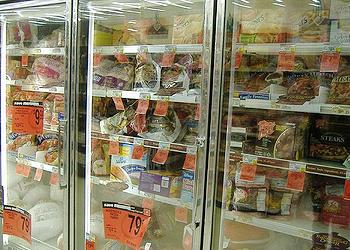
freezer
Freezer in a Safeway store, Portland, Oregon (Photo by Heather)

“This first-of-its-kind settlement will benefit all Americans by cutting emissions of ozone-depleting substances across Safeway’s national supermarket chain,” said Robert Dreher, acting assistant attorney general for the Justice Department’s Environment and Natural Resources Division. “It can serve as a model for comprehensive solutions that improve industry compliance with the nation’s Clean Air Act.”

The settlement agreement resolves allegations by the U.S. Environmental Protection Agency and Justice Department that Safeway violated the Clean Air Act by failing to promptly repair leaks of the hydro-chlorofluorocarbon HCFC-22, a common refrigerant used by supermarkets that is a greenhouse gas and an ozone-depleting substance.

The grocery chain also failed to keep adequate records of the servicing of its refrigeration equipment, the government agencies allege.

EPA regulations issued under Title VI of the Clean Air Act require that owner or operators of commercial refrigeration equipment that contains over 50 pounds of ozone-depleting refrigerants, and that has an annual leak rate greater than 35 percent repair such leaks within 30 days.

HCFC-22 is up to 1,800 times more potent than carbon dioxide in terms of global warming emissions. The measures that Safeway has committed to are expected to prevent over 100,000 pounds of future releases of ozone-depleting refrigerants that destroy the ozone layer.

Safeway will now implement a corporate refrigerant compliance management system to comply with stratospheric ozone regulations.

Under the settlement, Safeway has agreed to reduce its corporate-wide average leak rate from 25 percent in 2012 to 18 percent or below in 2015. The company will reduce the aggregate refrigerant emissions at its highest-emission stores by 10 percent each year for three years.
“Safeway’s new corporate commitment to reduce air pollution and help protect the ozone layer is vital and significant,” said Cynthia Giles, assistant administrator for EPA’s Office of Enforcement and Compliance Assurance.

“Fixing leaks, improving compliance and reducing emissions will make a real difference in protecting us from the dangers of ozone depletion, while reducing the impact on climate change,” said Giles.

HCFCs deplete the stratospheric ozone layer, which allows dangerous amounts of cancer-causing ultraviolet rays from the sun to strike the Earth, leading to adverse health effects that include skin cancers, cataracts, and suppressed immune systems.

“The impact of ozone depletion is a global phenomenon, and the health and environmental harm as a result of Safeway’s emissions do not have particularized impact on communities near stores where the violations occurred,” explains the EPA. “However, all citizens may be more susceptible to skin cancers, cataracts and immune system suppression as a result of violations like these.”

Under the Montreal Protocol, an international treaty, the United States is implementing strict reductions of ozone-depleting refrigerants, including a production and import ban on HCFC-22 by 2020.

The settlement is part of EPA’s national enforcement initiative to control harmful air pollution from the largest sources of emissions, including large grocery stores.

EPA’s GreenChill Partnership Program works with food retailers to reduce refrigerant emissions and decrease their impact on the ozone layer and climate change by transitioning to environmentally friendlier refrigerants, using less refrigerant and eliminating leaks, and adopting green refrigeration technologies and best environmental practices.

Safeway, headquartered in Pleasanton, California has 1,412 stores in the United States and 2012 revenues of $44.2 billion. Safeway operates companies under the banner of Vons in southern California and Nevada, Randalls in Texas, and Carrs in Alaska.

The settlement was lodged Wednesday in the U.S. District Court for the Northern District of California, and is subject to a 30-day public comment period and final court approval. It will be available for viewing at www.justice.gov/enrd/Consent_Decrees.

Thursday, August 9, 2012

Global Expansion Continues With US Deal

The Bristol Post
Michael Ribbeck
August 8 2012

A-Gas buys disposal specialist

A company based in Portishead which specializes in supplying gases used in refrigeration has just completed its fourth takeover this year.

A-Gas has gone on its acquisition spree as part of a strategy to expand into international markets.

The firm is already one of the world's largest suppliers of refrigerated gases, environmental services and specialty gases and chemicals.

The company, which also has offices in Bristol, has bough United States based RemTec International in its latest deal. The firm specializes in disposing of harmful gases.

The value of the deal was not made public but it took place with support from private equity specialist LDC, which invested in the firm in April 2011.

RemTec was set up in 1986 and provides products and services inolved in managing Ozone Depleting Substances (ODS) and substances high in Global Warming Potential (GWP) across the world. 

As part of the expansion plan A-Gas has now got a presence in the Middle East, China, Australia and India as well as Latin America.

RemTec has contracts with organizations all over the world to remove, recycle and remarket halocarbons.

The acquisition of RemTec follows on from similar acquisitions of Australian-based Technochem in March and SA Rural in May, and UK based A-Zone Technologies in April.

John Rutley, chairman of A-Gas International, said, "The acquisition of RemTec is another great example of our ambition to grow the business on a global scale."

"RemTec brings a market leadership position in Halons and a strong platform for growth in refrigerants; we believe that there is real scope to build further upon RemTec's success to date in North America, whilst also driving value across the enlarged group."

Ian Podmore of LDC added: "2012 has been an exceptionally busy year to date for A-Gas. RemTec is the fourth strategic acquisition completed by the business this year and not only strengthens their existing position in the global refrigerant market but also gives the business real scale within the USA."

"The transaction brings many strategic benefits to A-Gas and is part of an agreed strategy to rapidly expand and build the business both through organic investment and bolt-on acquisitions. We will continue to work closely with the team to drive their amitious growth plans."

Yann Souillard, managing director of LDC South Region, added: "LDC's South team has worked in close conjunction with the management team to support their ambitious 'buy and build' growth strategy. As part of our investment commitment, LDC works closely with our investment portfolio to provide expertise and follow-on funding when the right target companies become available."

West Gas Firm Expands With Buying Spree

Western Daily Press
9 August 2012

A company based in Portishead which specializes in supplying gases used in refrigeration has just completed its fourth takeover this year.

A-Gas has gone on its acquisition spree as part of a strategy to expand into international markets.

The firm is already one of the world's largest suppliers of refrigerated gases, environmental services and specialty gases and chemicals.

The company, which also has offices in Bristol, has bough United States based RemTec International in its latest deal. The firm specializes in disposing of harmful gases.

The value of the deal was not made public but it took place with support from private equity specialist LDC, which invested in the firm in April 2011.

RemTec was set up in 1986 and provides products and services inolved in managing Ozone Depleting Substances (ODS) and substances high in Global Warming Potential (GWP) across the world. 

As part of the expansion plan A-Gas has now got a presence in the Middle East, China, Australia and India as well as Latin America.

RemTec has contracts with organizations all over the world to remove, recycle and remarket halocarbons.

The acquisition of RemTec follows on from similar acquisitions of Australian-based Technochem in March and SA Rural in May, and UK based A-Zone Technologies in April.

John Rutley, chairman of A-Gas International, said, "The acquisition of RemTec is another great example of our ambition to grow the business on a global scale."

Friday, February 17, 2012

Price of R-22 Air Conditioner Refrigerant Drastically Increases

Written by Jesse Muench


We are quite concerned about the recent drastic price increase of R-22 (also called Freon), a coolant used in many air conditioners, due to a regulation put into place by the Environmental Protection Agency (EPA) (http://www.epa.gov/ozone/title6/downloads/Homeowner.pdf) that will phase out the use of R-22 completely by the year 2020. R-22 has been shown to release Hydrochlorofluorocarbons (HCFC’s), which are harmful to the ozone, leading the EPA to gradually eliminate it.

Because of this phase out R-22 refrigerant will gradually be produced less and less, thus diminishing supplies and increasing costs of the coolant. The cost for Freon recently doubled, and is anticipated to eventually triple, placing a major burden on air conditioner owners. The recent spikes in price have put HVAC contractors in a state of frenzy. In the South where air conditioners are used more frequently many HVAC companies are buying as much R-22 as possible thus making it even scarcer and making the price even higher in the North.

If you own an air conditioner that uses R-22 there are two primary issues that will affect you. The first is that as time goes on it will become more and more expensive to add Freon to your air conditioner, and eventually it will be completely unavailable. The second issue is that theft of R-22 from your air conditioner becomes much more likely. As Freon becomes more and more scarce and the prices rise it will become much more valuable, and increase the incentive to steal it.

Most air conditioners 5-10 years or older use R-22. If you are uncertain of what type of refrigerant your air conditioning unit uses don’t hesitate to give us call and we can help you determine if this recent price shift will affect you. We are also available for any questions you have about this change or challenges it may present to you. Feel free to give us a call at 262-677-1037 for any of these questions or for more information. There is also a Frequently Asked Question section on the EPA’s website that can help you better understand what this all means for you. We will keep you updated of any major changes in this matter right here on our blog. Also be sure to watch the video attached below in which our owner Steve Holland briefly discusses what to expect with Freon and how it will affect you.

The information contained in this article have been written for the HVAC industry public or private and are not to copied, reproduced or plagiarized without the written consent of the author. News publications and trade organizations interested in using content contained in this blog/article can contact Steve Holland at Holland Home Services at the Contact Us section of this.

Thursday, September 22, 2011

Climate Crisis - The 21 Gigatonne Time Bomb (Nature Inc)

THE 21 GIGATONNE TIMEBOMB: Broadcast in May 2011 on BBC World News to 300 million homes this programme explores the much-neglected issue of what to do about the super-greenhouse gases?

Under the 1987 Montreal Protocol, CFCs and other so-called ozone-depleting chemicals are outlawed, but their Hydrofluorocarbon (HFC) replacements – while harmless to the ozone layer – are powerful greenhouse agents.

According to the Intergovernmental Panel on Climate Change fully one fifth of the greenhouse effect by midcentury will be ascribed to these ozone-friendly but "super greenhouse gases" used in refrigeration and air conditioning.

There are alternatives – principally hydrocarbons - commercially available now (but also ammonia, carbon dioxide and water), but in some countries, they are considered a fire hazard, and are restricted. Many countries allow their usage provided safety standards are followed.

Meanwhile companies such as Dupont are developing a new generation of refrigerants, such as R-1234yf, that they claim have an minimal impact on climate change and are only "mildly flammable" (overlooking extremely toxic combustion byproducts including the lethal hydrogen fluoride).

But they are not yet commercially available, and will be far more expensive than hydrocarbons and high GWP HFCs when they come to market. Different countries have different stances on how to deal with HFC issue. This documentary examines this interesting story from different perspectives.      

http://vimeo.com/23345397